If you’re starting a business on social media in 2026, don’t start by posting.
Start by building your foundation first.
That means:
getting clear on what social media should actually do for your business
choosing the right platform
setting up your profile properly
then creating content that supports all of that
Most business owners do the opposite.
They start posting right away… and then try to figure everything else out later.
That’s usually where things start to feel frustrating.
Let’s talk about what’s actually happening
You’re showing up.
You’re trying.
You’re posting when you can.
Saving ideas.
Testing things.
But it’s not really turning into anything yet.
No steady growth.
No consistent inquiries.
No clear sign that this is working.
And if you’re being honest… it starts to feel like a lot of effort without a return.
That’s not because you’re doing it wrong.
It’s because you started at the most visible part — content — before building what makes content work.
The shift most people need (and avoid)
Social media isn’t just somewhere you post.
It’s where people check if your business is real.
Before someone buys, they look you up.
Before someone messages, they scroll your profile.
And in a few seconds, they decide:
“Do I understand this?”
“Do I trust this?”
“Do I know what to do next?”
If the answer is no, they leave.
That’s why we look at it like this:
→ Social media is a brand channel
→ Content is a business asset
Not something you do occasionally.
Something you build on.
The exact order we would follow in 2026
If we were starting from scratch today, this is the order we’d follow.
Not because it sounds good — but because we’ve seen what happens when this order is skipped.
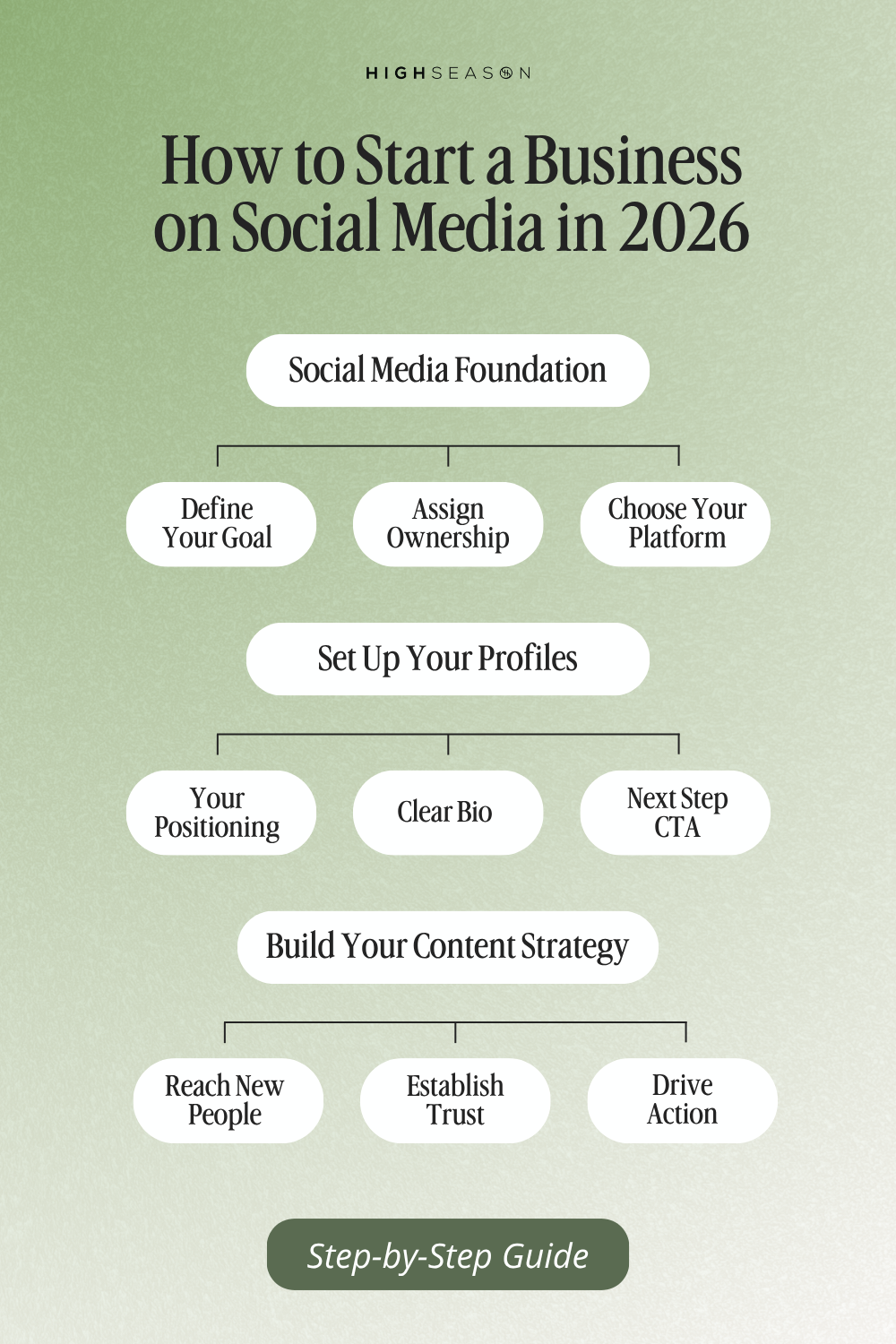
Step 1 — Decide what social media is responsible for
Before anything else, pause and ask yourself:
What is social media supposed to do for my business?
Not what platform you want to use.
Not what kind of content you like.
What is its job?
Because once you answer that, everything else gets easier.
For example:
If your goal is clients → your content should build trust
If your goal is sales → your content should drive action
If your goal is visibility → your content should reach new people
If you skip this step, you end up posting just to post.
And that’s when it starts to feel heavy.
Step 2 — Decide who owns it
This is the part people avoid… but it matters more than it seems.
Someone has to be responsible for your social media.
That might be you.
It might be someone you hire.
It might be a mix.
But it has to be clear.
Because when it’s not clear, it becomes something you “get to later.”
And later usually turns into inconsistent.
You don’t need a big team.
But you do need ownership.
Step 3 — Choose your platforms (with intention)
You don’t need to be everywhere.
In fact, trying to be everywhere is usually what slows people down.
What we recommend instead:
→ One primary platform
→ One secondary platform
Focus your effort.
Let it compound.
You can always expand later.
Right now, you’re building traction — not trying to prove you exist everywhere.
Step 4 — Set up your profiles properly (this is the big one)
This is where we see the most missed opportunities.
Someone lands on your profile… and they pause.
Not because they’re not interested.
Because they’re confused.
They’re trying to figure out:
who this is for
what you actually do
what they should do next
And if that’s not obvious, they leave.
Quietly.
No follow.
No DM.
No sale.
That’s why your profile matters so much.
It’s not decoration.
It’s your first conversion point.
Step 5 — Build your content strategy
Now you can start thinking about content.
But this time, it’s different.
You’re not asking:
“What should I post?”
You’re asking:
“What does my business need this content to do?”
Start here:
What do you sell?
How do people buy from you?
What would someone need to see to trust you?
Then build content around that.
Some posts will:
attract people
build trust
deepen connection
drive action
You need all of it.
Because attention alone doesn’t grow a business.
Direction does.
Step 6 — Put simple habits in place
This is what protects everything you just built.
Because the drop-off doesn’t happen from lack of effort.
It happens when there’s no structure.
A few simple things go a long way:
batch your content before you run out
block time to create
check what’s working weekly
stay aware of how platforms are evolving
You don’t need to do everything.
You just need a system you can repeat.
What this actually changes
When you build in this order, things start to feel different.
You’re not guessing anymore.
Your content has direction.
Your profile makes sense.
People understand what you do.
And slowly, you start to see:
more profile visits
more messages
more interest
That’s when social media starts doing its job.
And that’s the goal.
Common mistakes (that are easy to fix)
If you’re feeling stuck, it’s usually one of these:
you started posting before getting clear on your goal
your profile doesn’t explain what you do clearly
you’re trying to be on too many platforms
your content isn’t connected to how you make money
you don’t have a system, so everything feels manual
None of this means you’re behind.
It just means your foundation needs tightening.
A quick example
Let’s say you’re a service provider.
Instead of posting randomly, you do this:
You decide your goal is to book clients
You position your content to show your expertise
You focus on one platform
You make your profile clear and direct
You create content that answers real client questions
Now everything connects.
And when things connect, they start to work.
FAQ: Starting a Business on Social Media
Q: Where should I start with social media for my business?
A: Start with your business goal. Then decide what role social media plays in achieving that before creating any content.
Q: Do I need to post every day?
A: No. What matters is building content that works over time. Consistency comes from having a system, not from forcing frequency.
Q: Why isn’t my content converting?
A: Most of the time, it’s not the content itself. It’s that your profile or positioning isn’t clear enough for people to take the next step.
Q: How do I know what platform to choose?
A: Look at where your audience already spends time and what format you can realistically create consistently.
Q: How do I grow my email list fast?
A: Create valuable freebies, talk about them often, and make sign-ups effortless.
If you want help with the foundation
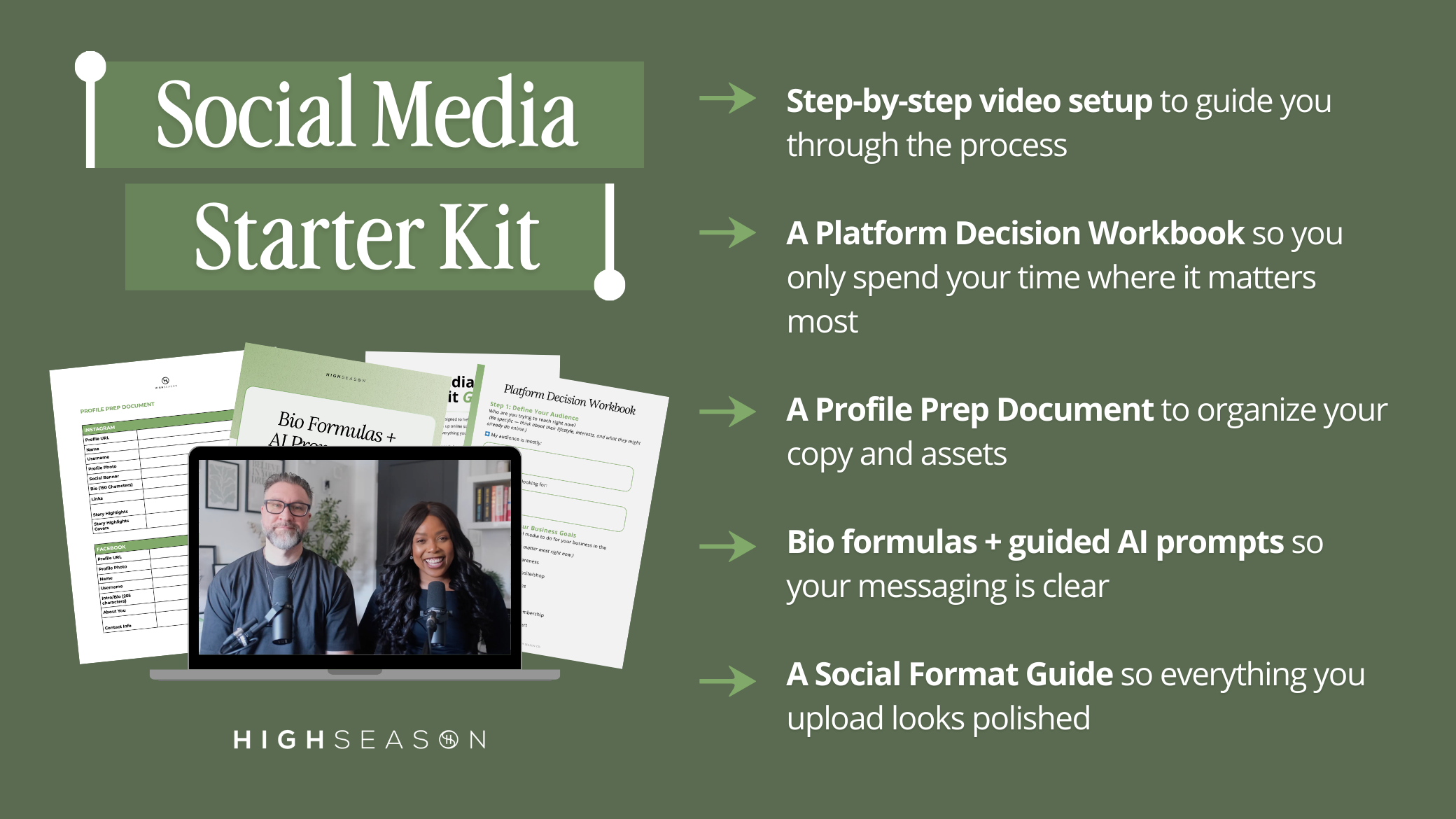
This is exactly why we created the Social Media Starter Kit.
Because this part — the setup — is where most business owners get stuck.
You’ve already started.
You’ve already put in effort.
You just want to know:
“Is this set up properly?”
Inside the Starter Kit, we walk you through:
how to choose the right platform
what your profile should say
how to structure everything clearly
how to guide people to take the next step
So when someone lands on your page, they get it.
👉 You can check it out below ⤵
If you take one thing from this:
You don’t need to do more.
You need to build this in the right order.
And once you do… everything starts to feel a lot lighter.