How to Be a Social Media Manager in 2026 (Skills, Systems, and Strategy That Get Clients)
If you want to be a social media manager in 2026, your role goes far beyond posting — you’re responsible for building and managing a system that supports a business.
That’s the shift.
It’s not just:
content
captions
consistency
It’s structure.
It’s clarity.
It’s being able to take a business goal and translate it into content, workflows, and results.
And once you understand that, everything about this role starts to make more sense.
What’s changed about social media management
Most people enter this space thinking:
“I just need to get good at content.”
And content does matter.
But what actually determines whether someone:
gets hired
keeps clients
and builds a long-term career
is everything happening around the content.
Because from a business perspective, social media isn’t just a channel.
It’s:
marketing
communication
brand positioning
and often a direct driver of revenue
So when someone hires a social media manager, they’re not just hiring a creator.
They’re hiring someone to manage that entire layer of the business.
What a social media manager actually does in 2026
A helpful way to think about this role is:
You’re managing a system — not just content.
Definition:
Social Media Manager (2026)
→ Someone who plans, executes, and manages content systems that support business growth.
That includes:
understanding the business
translating that into content
organizing how that content gets created
and tracking how it performs
So instead of asking:
“What should I post?”
You’re thinking:
“What is this business trying to achieve — and how does content support that?”
That’s a very different level of responsibility.
The skills that actually move your career forward
Let me walk you through the skills that make the biggest difference — not just in getting started, but in building something sustainable.
You need strong operational systems
This is one of the most underrated parts of social media management.
And it’s often the reason some managers feel overwhelmed… while others feel in control.
When your systems are clear:
your work is easier to manage
your clients feel more confident
and your results are easier to track
This includes having structured processes for:
onboarding clients
planning content
managing approvals
communicating updates
reporting performance
Over time, these systems become your foundation.
They’re what allow you to grow without everything feeling chaotic.
And they’re a big part of why clients stay.
You need to set clear expectations early
A lot of challenges in this role come from misalignment.
Not because the work isn’t good.
But because expectations weren’t clear.
From the beginning, you want to define:
what success looks like
how progress will be measured
what timelines actually make sense
Because if those pieces aren’t clear, it becomes very easy for someone to feel like things aren’t working — even when they are.
Clarity here protects both you and the client.
You need to understand content at a deeper level
This is where your creative skill comes in — but it goes beyond just making posts.
You want to understand:
why certain content performs
how different formats work
what builds trust with an audience
That comes from:
studying content regularly
testing different approaches
staying close to the platforms themselves
Social media changes quickly.
The people who grow in this role are the ones who stay curious.
You’ll benefit from having a point of view
Over time, you’ll start to notice what you’re good at.
Maybe it’s:
a specific platform
a certain type of client
a style of content
Leaning into that makes you easier to:
position
refer
and trust
Instead of trying to do everything, you start to be known for something.
And that changes how opportunities come to you.
You need a strong creative eye
Even if you’re not designing everything yourself, this matters.
You want to be able to look at content and know:
does this feel clear?
does this feel intentional?
does this match the brand?
That ability to recognize quality — and guide it — is a big part of your role.
It’s what helps your work feel elevated.
You need to understand performance
Posting is just one part of the process.
The other part is understanding what happens after.
Looking at:
what people engage with
what they watch
what they share
And using that information to guide your next decisions.
This is how you move from:
guessing
to:
making informed decisions
Ads knowledge gives you an edge
This isn’t required.
But it does expand what you can offer.
Even a basic understanding of paid media helps you:
extend reach
support campaigns
and drive more consistent results
For many clients, this becomes a valuable layer.
The system that ties everything together
If you zoom out, all of this connects through one thing:
A structured workflow.
A simple way to think about it:
onboarding → gives you direction
planning → turns that direction into content
execution → brings it to life
reporting → shows what’s working
Each step builds on the last.
And when that system is in place, your work becomes:
easier to manage
easier to explain
and easier to scale
If you want to build this faster
If you’re working on your systems right now, you don’t need to figure it all out from scratch.
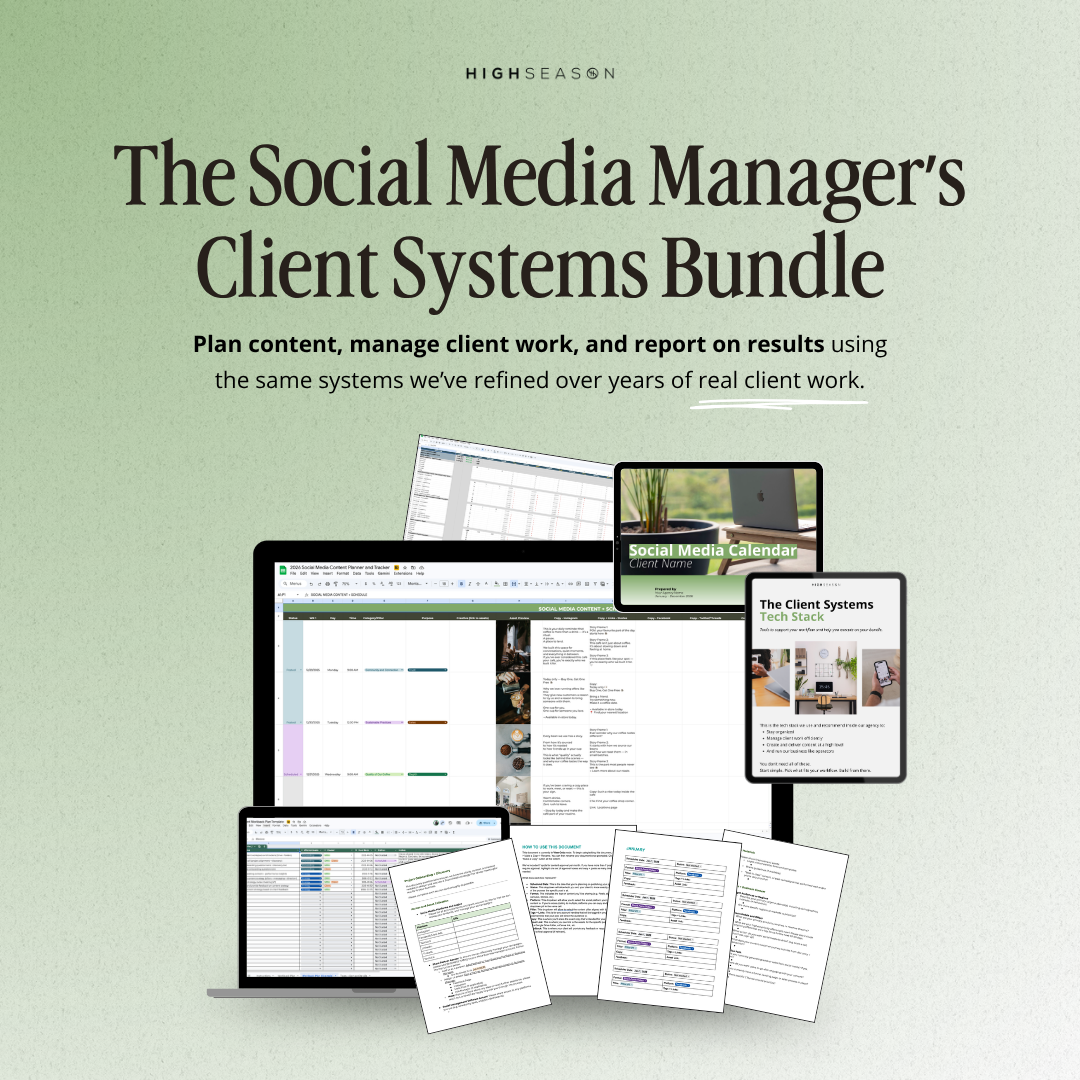
We packaged the exact systems we’ve used across years of client work into:
👉 The Social Media Manager’s Client Systems Bundle
Inside, you’ll get:
Client Onboarding & Discovery Template
Client Workback Plan Template
Content Planning & Approval System
Social Media Reporting Template
Quick Start Guide
These are designed to help you:
stay organized
communicate clearly
and run a structured workflow from start to finish
Common mistakes that slow your growth
If things feel difficult or inconsistent, it often comes back to:
not having clear systems
unclear expectations
creating content without a strategy
not reviewing performance
These aren’t gaps in effort.
They’re gaps in structure.
And once those are addressed, the role becomes much more manageable.
FAQ: How to Be a Social Media Manager in 2026
Q: What skills do you need to be a social media manager?
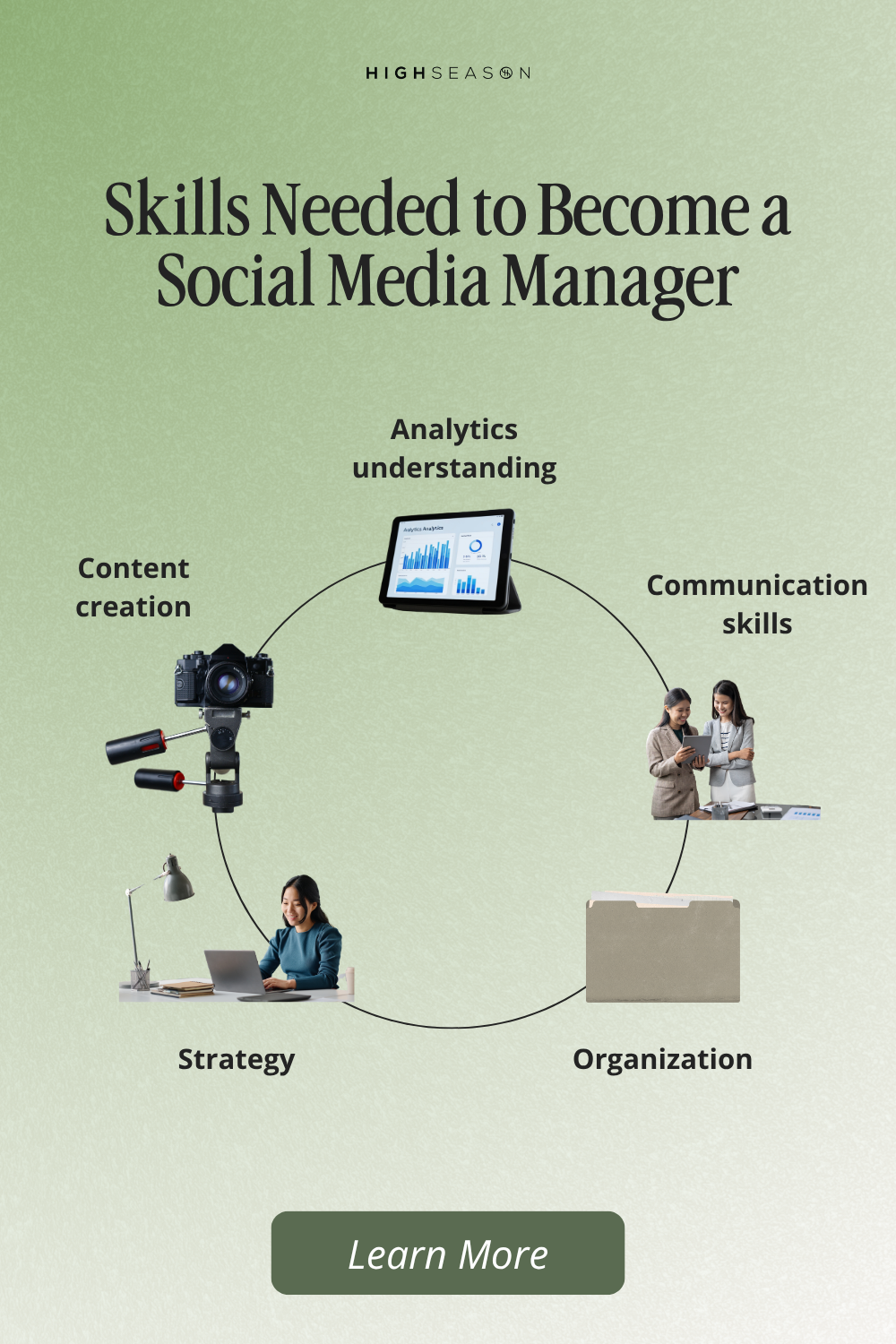
A: You need a mix of content creation, strategy, organization, and communication skills.
Q: Do you need experience to become a social media manager?
A: You can start without formal experience, but you need systems and examples of your work to build trust.
Q: How do social media managers get clients?
A: Through referrals, content, networking, and clear positioning.
Q: Is social media management a good career in 2026?
A: Yes — especially for those who can connect content to business outcomes and manage workflows effectively.
Your next step
If you’re serious about this path, focus on building:
your systems
your structure
and your ability to think strategically
That’s what creates stability in this role.
If you want support, feedback, and a community of other social media managers:
Inside, we help you:
refine your work
answer your questions
and build your systems with guidance
Final thought
Social media management isn’t just about showing up.
It’s about building something that works — for you and for the businesses you support.
And once your systems are in place, everything starts to feel a lot more sustainable.