How to Create Content Pillars with AI That Actually Fit Your Business
You’ve heard you need content pillars. Every social media strategist says so. But knowing you need them and knowing what yours should be are two very different things.
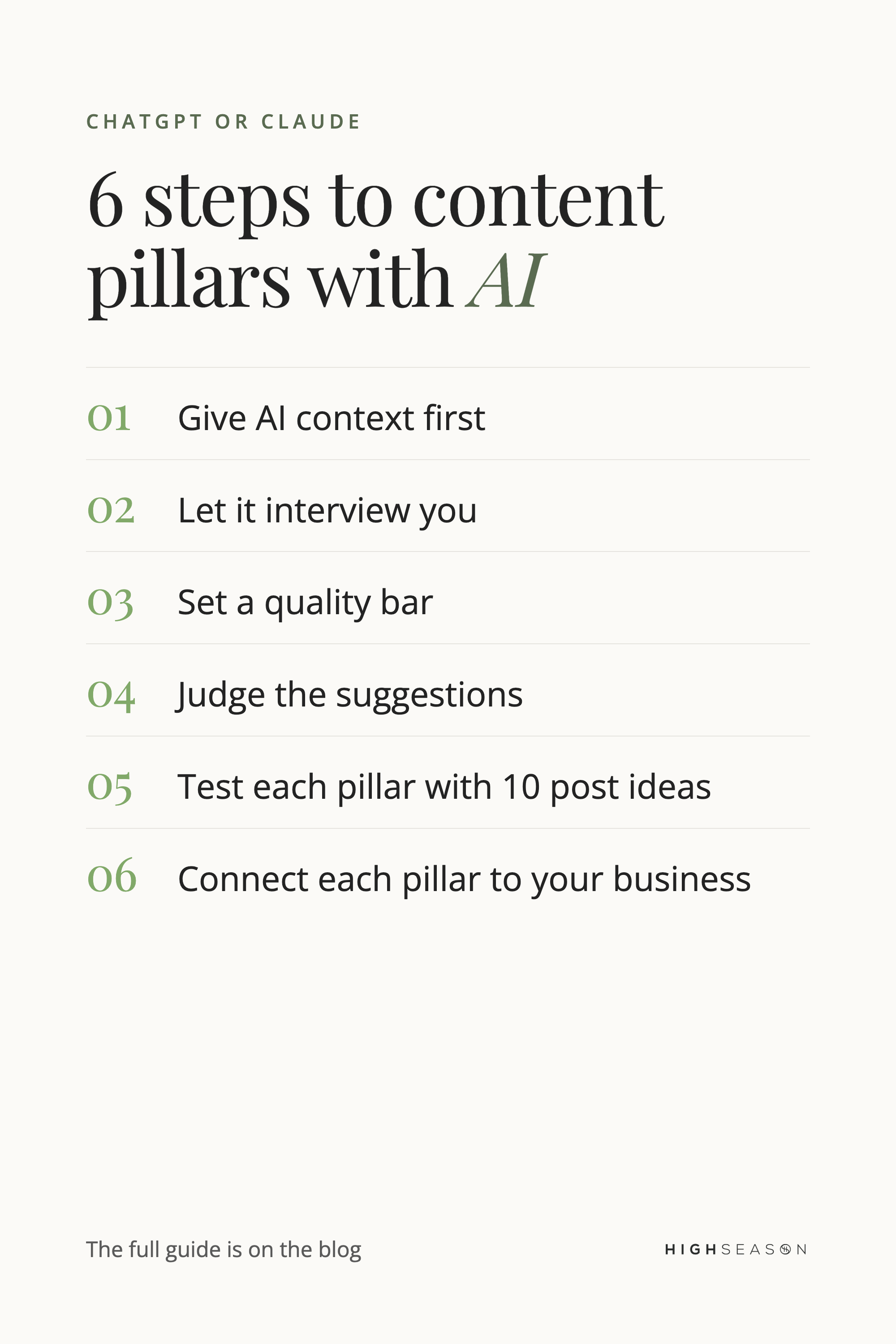
To create content pillars with AI, give ChatGPT or Claude real context about your business before you ask for pillars. Let it interview you about what you sell, who you serve and what makes you different. Then judge its suggestions against a clear quality bar, and test each pillar by asking for 10 distinct post ideas. Keep the four that pass.
Prefer to watch? We walk through the full process in Claude in this video.
What is a content pillar?
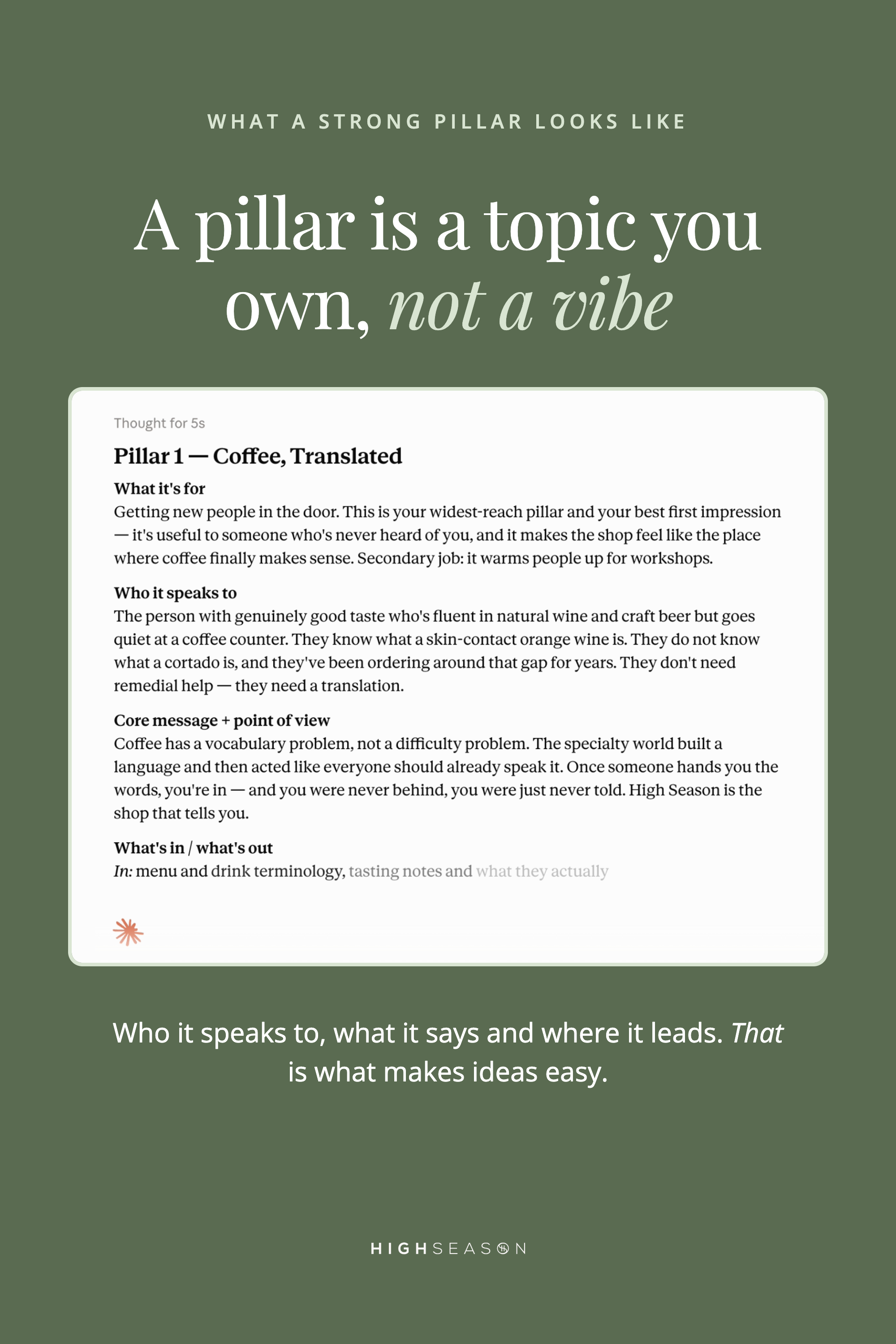
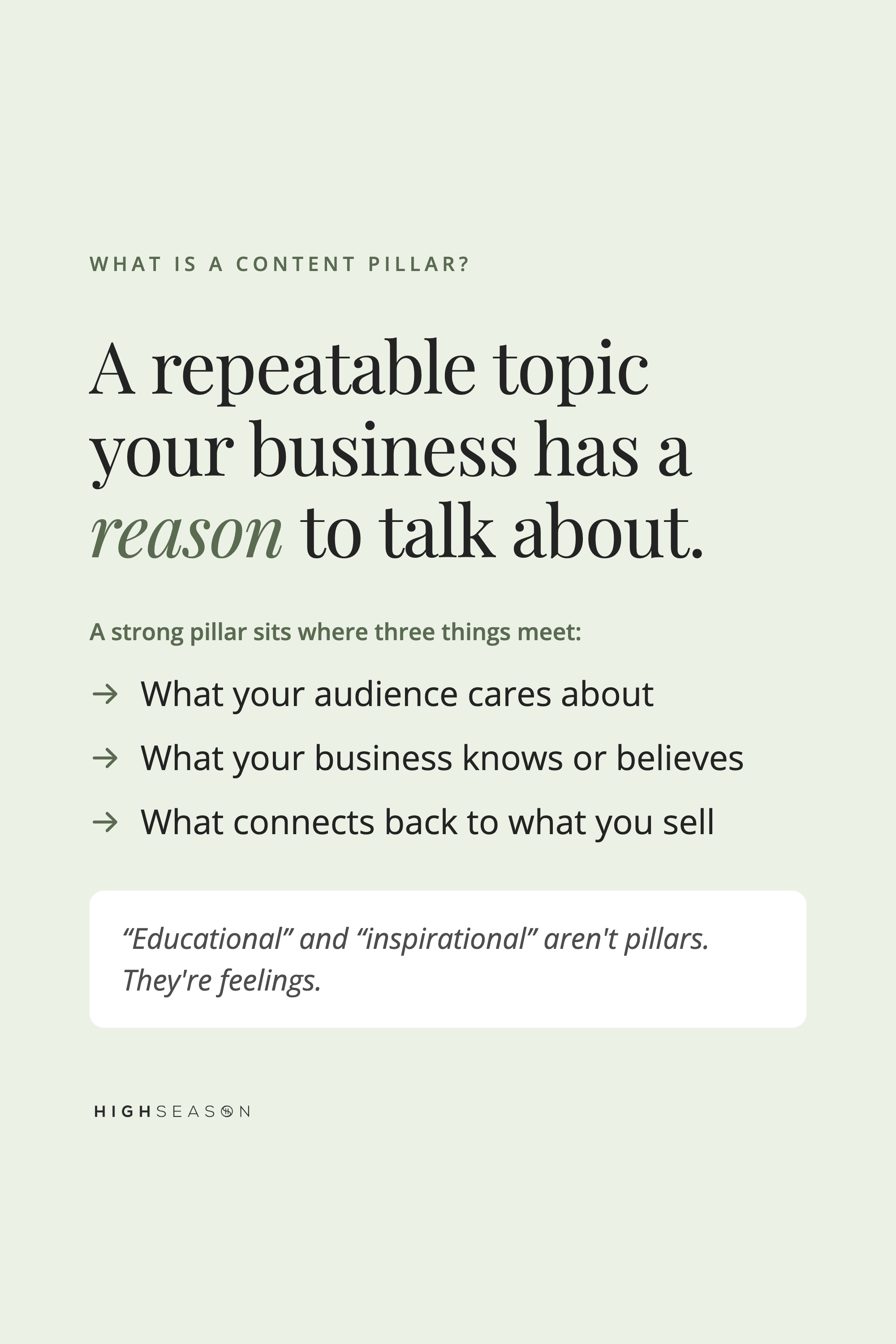
A content pillar is a repeatable topic your business has a reason to talk about. You might also hear them called content buckets or content categories.
A strong pillar sits where three things meet:
What your audience cares about
What your business knows or believes
What connects back to the work, products or services you sell
“Educational,” “inspirational” and “entertaining” are not content pillars. They describe how someone feels after a post. You can’t build ideas underneath a feeling.
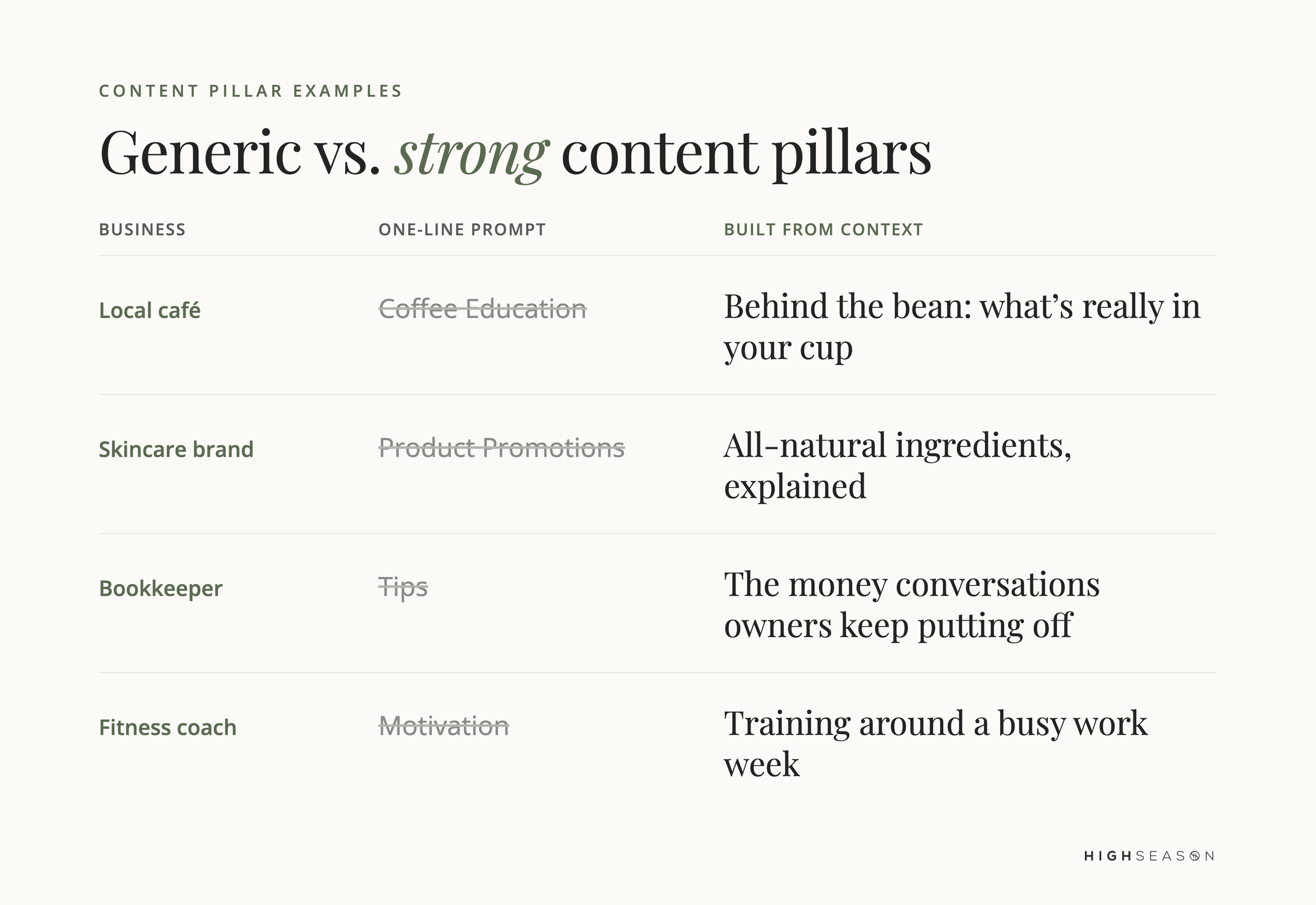
Here’s the difference for a local café. “Coffee education” is a broad label. “Behind the bean” is a pillar: it explores blends, gets people curious about what’s in their cup, and builds trust in the café as the experts to buy beans from. That’s a subject you can actually post from.
Why content pillars matter
Good content pillars make content easier to create. Instead of starting with “What should I post?” you start from a smaller, more useful topic. Ideas come faster.
Pillars also help your audience (and the algorithm) understand what you’re known for. When the same themes keep showing up, your content reinforces your expertise and your point of view. Random topics make people work harder to figure out where you fit.
That’s why we treat pillars as the foundation of a content strategy. They help decide what deserves your time. (New to strategy? Start with our Social Media Strategy Template).
The mistake most people make when using AI for content pillars
They ask for pillars before the AI understands the business.
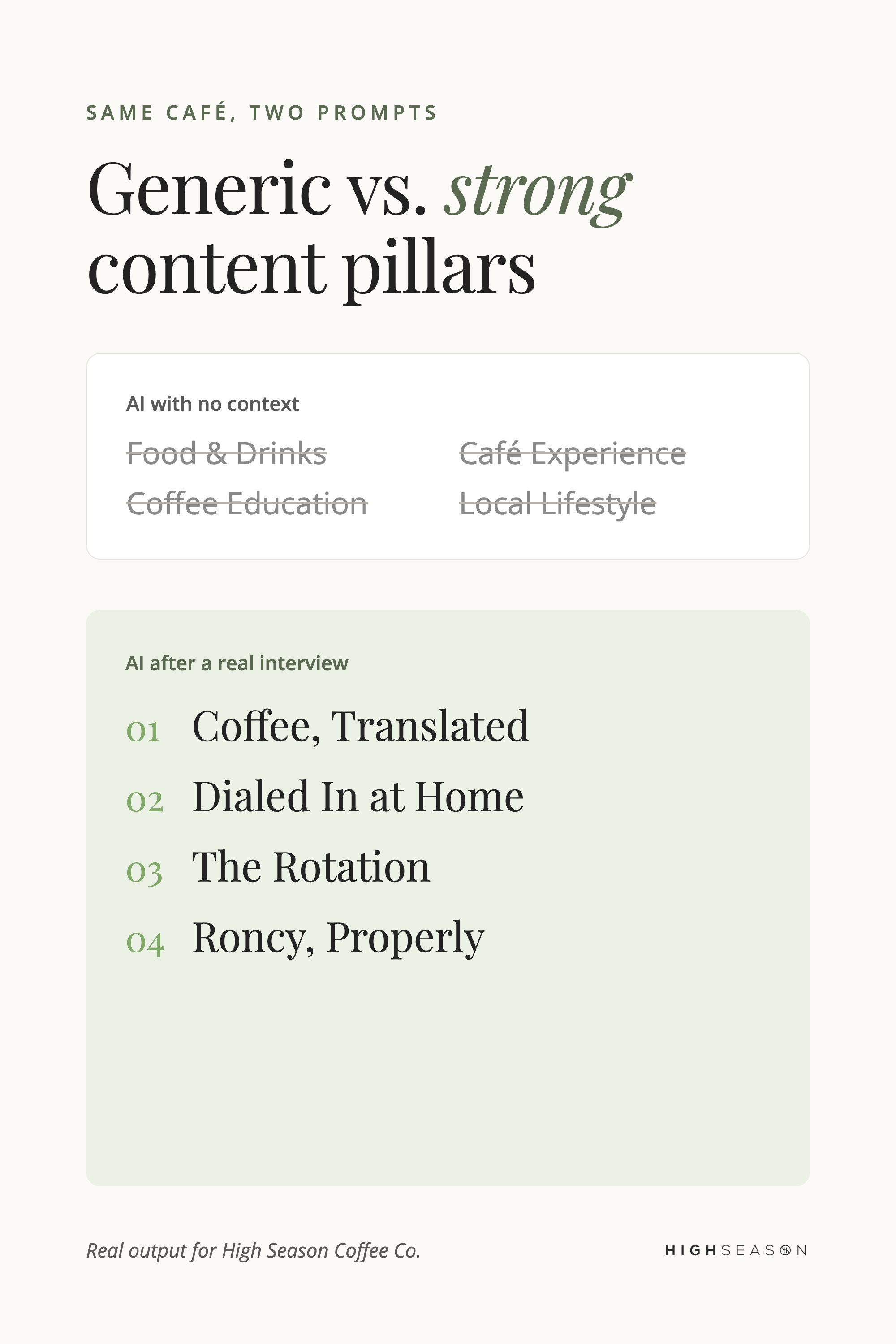
Type “Give me four content pillars for my café” into a blank chat, and ChatGPT or Claude has almost nothing to work with. It knows cafés in general. It doesn’t know yours. It doesn’t know who you want walking through the door, what makes you different, or what you need your content to do. So it fills the gaps with patterns.
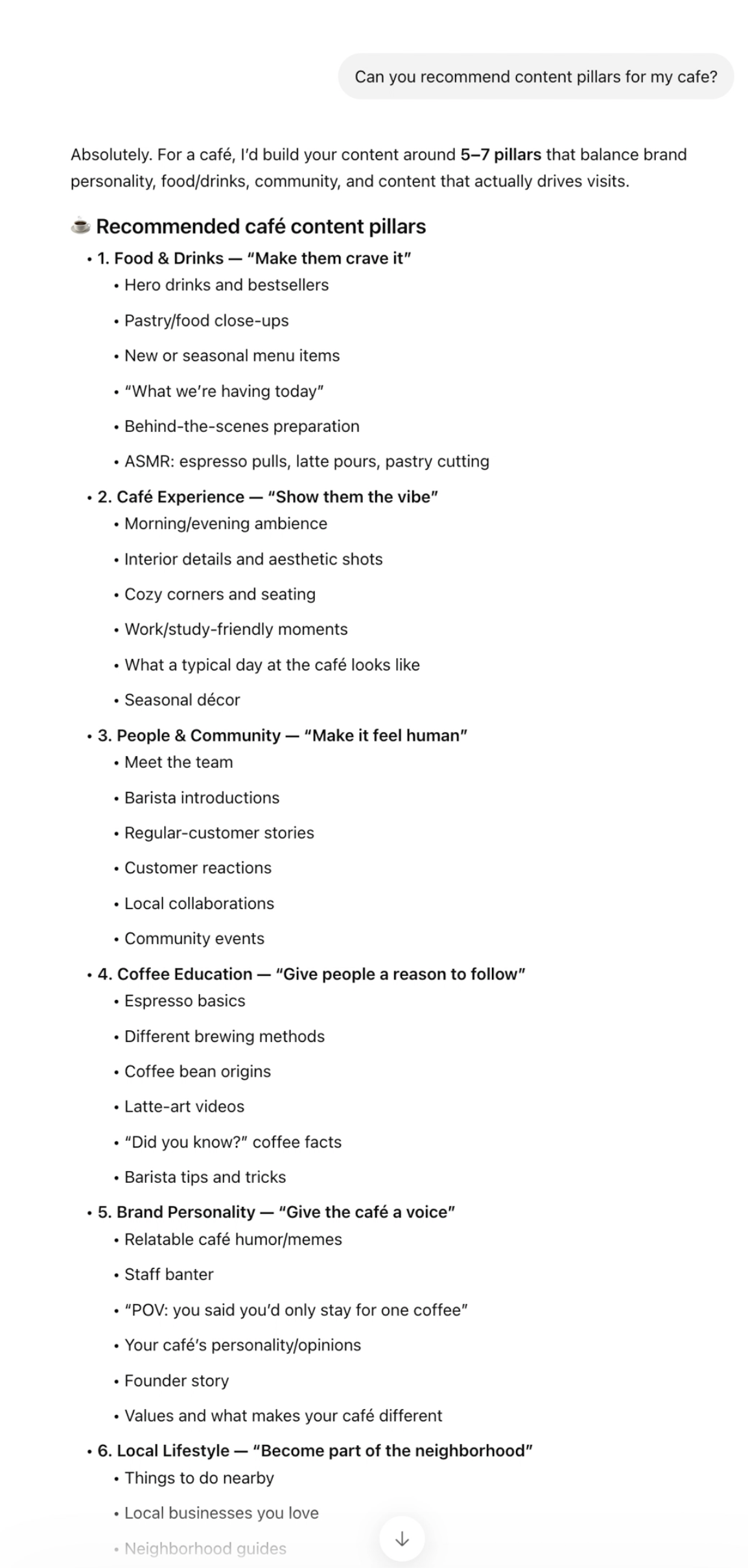
Nothing on that list is wrong. That’s the problem. You could hand the same pillars to fifty cafés. Most AI prompts for content pillars make this mistake: they ask for pillars in one line.
How to create content pillars with AI, step by step
These steps work in ChatGPT or Claude. Use the most capable model you have. Skip the “instant” or fast models for this one.
Step 1: Give the AI context first
The best place to start is a ChatGPT or Claude Project that already knows your business. That might include your business story, target audience, products or services, brand voice, customer feedback, testimonials and point of view.
No project yet? You don’t have to write a stack of documents first. Have the AI interview you instead.
Step 2: Let the AI interview you
Give the AI permission to keep asking questions until it understands your business. Don’t tell it to “ask a couple of questions.” At minimum, it needs to know:
What your business sells
What you want your content to accomplish
Who you’re trying to reach, in real detail
What makes your story, method, product or brand different
Talk instead of type if you can. Dictation gives the AI more detail with less effort from you.
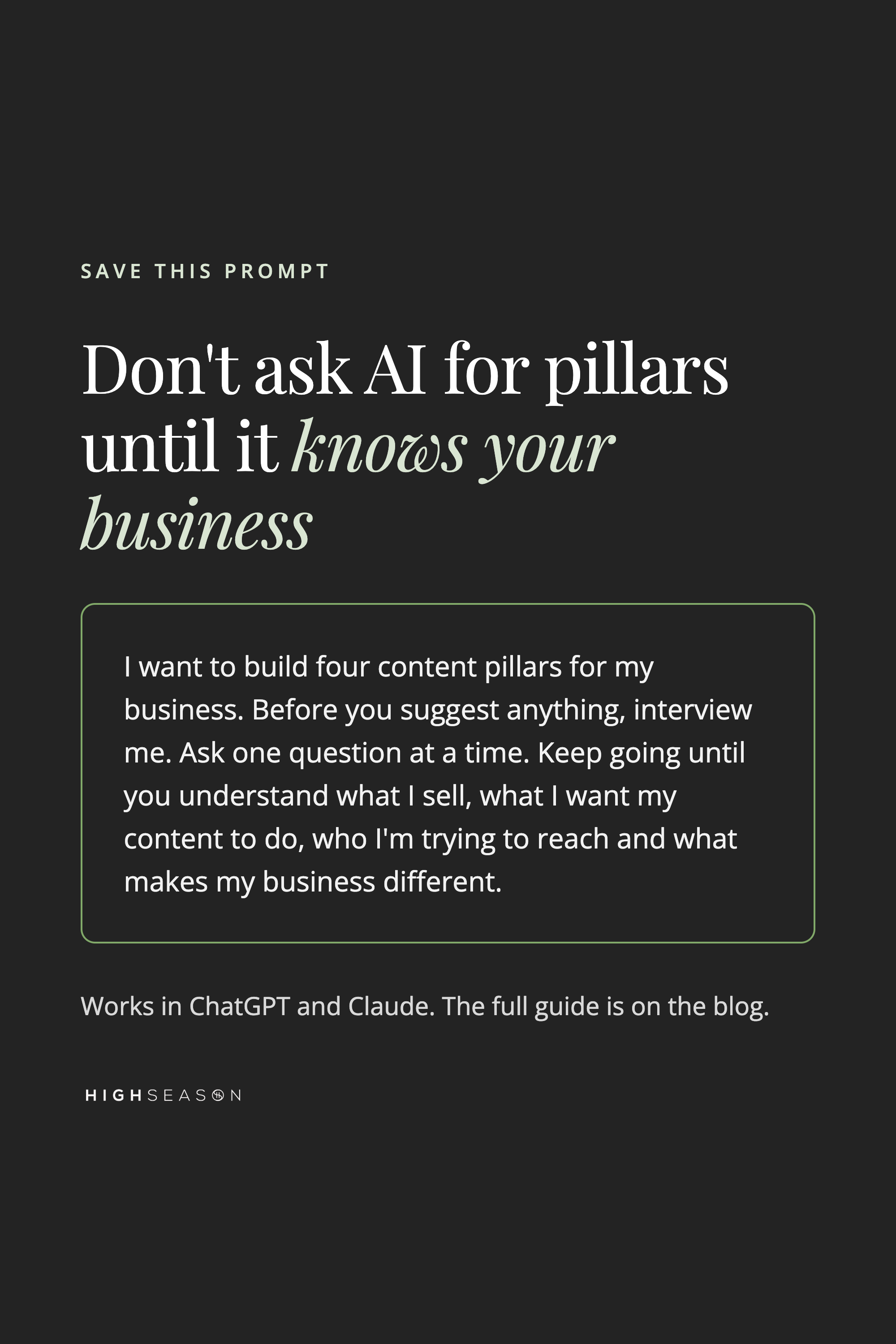
Here’s a prompt you can copy:
“I want to build four content pillars for my business. Before you suggest anything, interview me. Ask one question at a time. Keep going until you understand what I sell, what I want my content to do, who I’m trying to reach in detail, and what makes my business different. Tell me when you have enough to make a recommendation.”
Step 3: Set a quality bar
Decide what counts as a pillar before you see any suggestions. A strong content pillar:
Is an actual topic, not a feeling like “inspirational”
Is more than the name of your product
Is specific enough that another business couldn’t swap in their logo and use the same strategy
Step 4: Judge the suggestions
Ask for five or six options. Then check each one:
Does it connect to something your audience actually cares about?
Does it give your business something meaningful to say?
Does it reinforce what you want to be known for?
Can it lead back to your products, services, community or offers?
Is it different enough from the others to have its own job?
That last question matters. If two pillars overlap, you end up back where you started: topics too vague to post from. Ask the AI to explain why each pillar works. You need a standard to choose against.
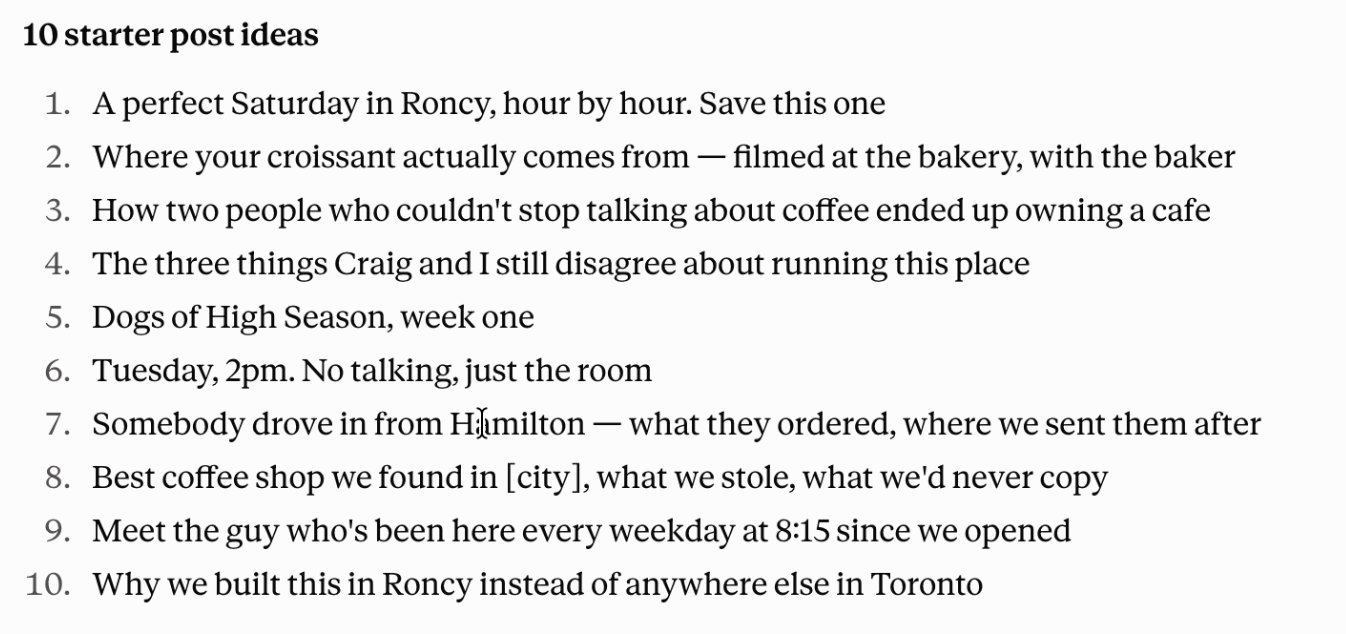
Step 5: Pressure-test each pillar with 10 post ideas
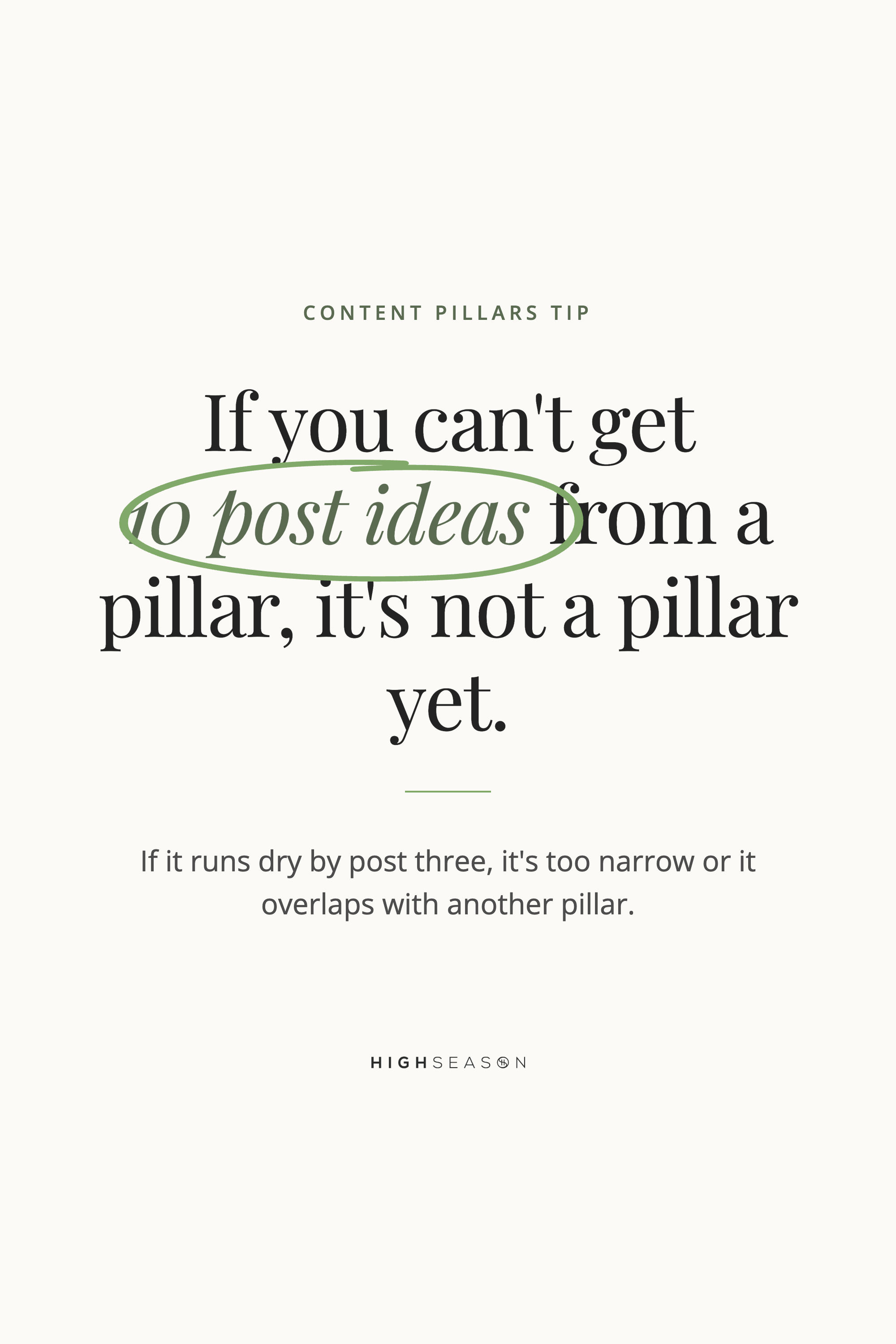
Ask for 10 strong, distinct post ideas under each pillar. Some pillars sound great as a heading and run dry by post three. When that happens, the pillar is too narrow, overlaps with another one, or sounded stronger in theory than in practice.
The bonus: every pillar that passes comes with 10 starting ideas. Four pillars means up to 40 ideas, ready to plan.
Step 6: Connect each pillar back to your business
Pillars shouldn’t live in a content bubble. For each one, write down:
Why this pillar exists
What questions your audience has about it
What it should help you become known for
Where it can lead: a product, a free resource, or trust before someone is ready to buy
Now every post has a clear reason to be in your strategy.
Generic vs. strong content pillar examples
These examples show the difference context makes.
Content pillars FAQ
How many content pillars should I have? Three to five works for most businesses, and we build four. Four gives you variety without spreading your content too thin.
Can I use ChatGPT or Claude to create content pillars? Yes. Both work well if you give them context first and use the most capable model available.
What’s the difference between content pillars and content buckets? Nothing. Content pillars, content buckets and content categories are different names for the same idea.
Are educational, inspirational and entertaining content pillars? No. Those describe the feeling a post creates. A content pillar is a topic, like “Behind the bean” for a café.
Do I need a paid tool to create content pillars? No. You can follow the steps above on your own. Our free Content Pillars Blueprint teaches the framework if you want a worksheet to work from.
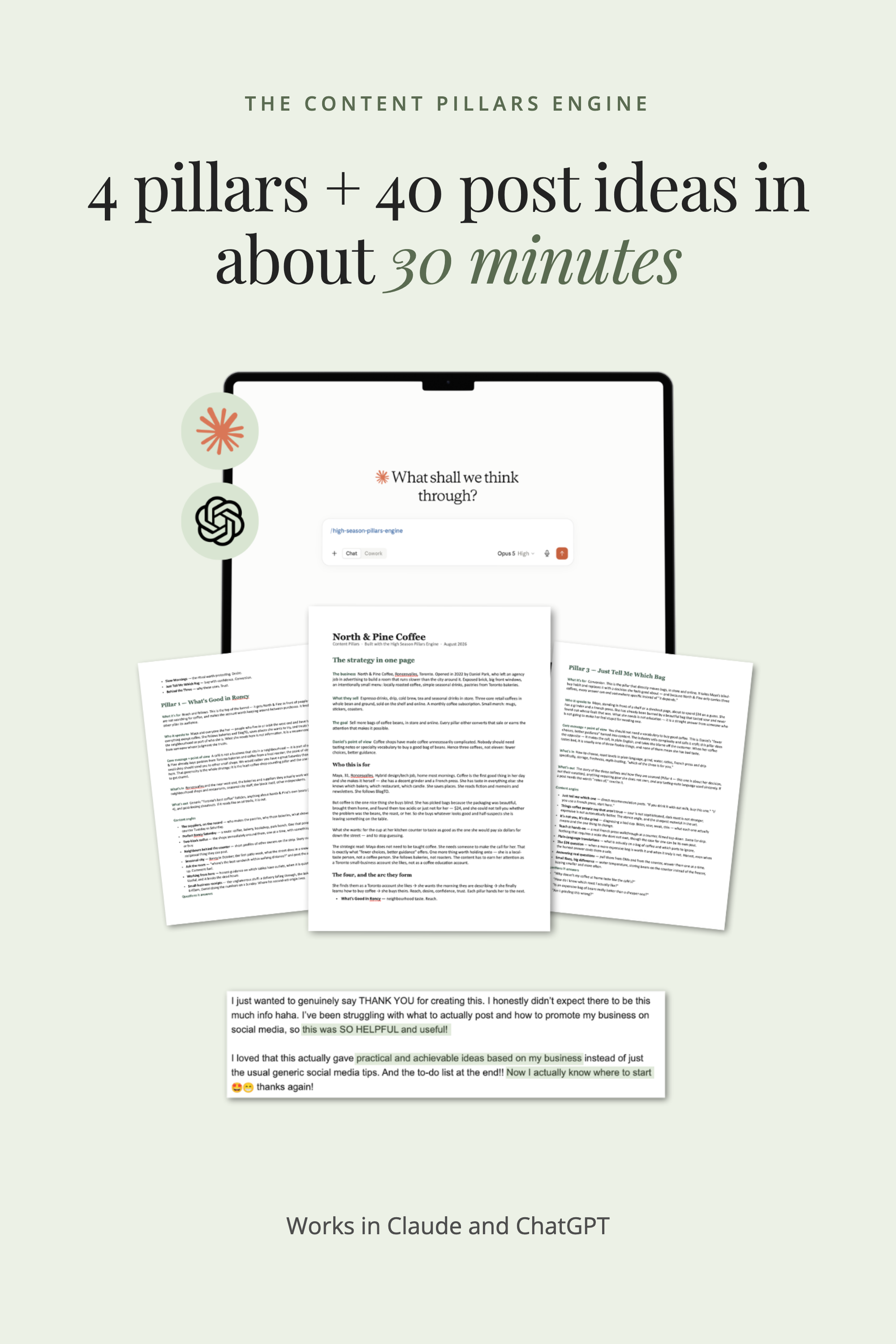
Want your content pillars done in about 30 minutes?
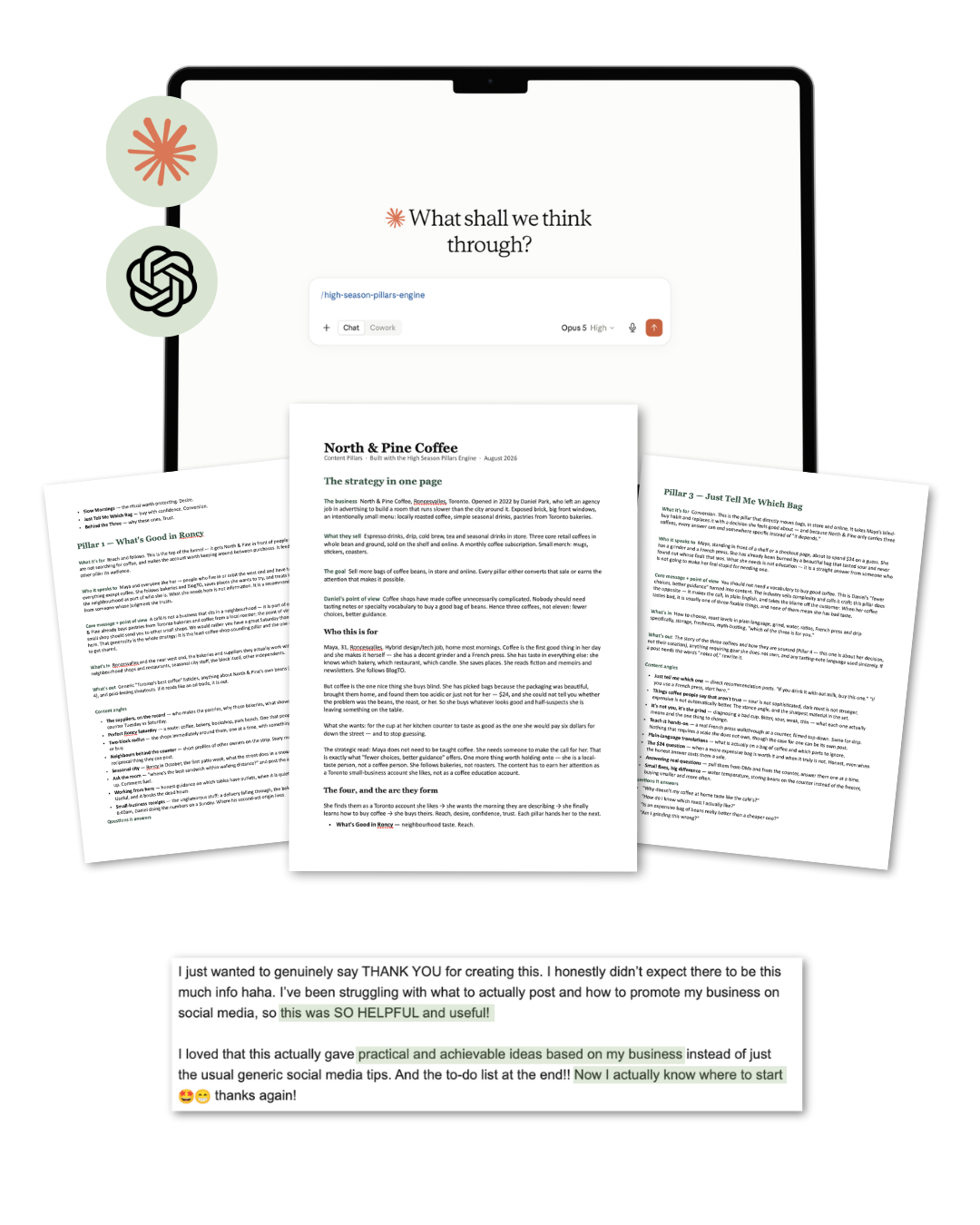
If you’d rather not manage every decision yourself, that’s exactly why we built the Content Pillars Engine.
It runs the same process we use with our clients: the interview, the evaluation, the 10-idea pressure test and the final refinement. You answer questions about your business. It handles the strategy. It works in Claude and ChatGPT.
In about 30 minutes, you get four finished pillars and up to 40 post ideas in a document. Use it every time you plan content, and upload it to your Claude or ChatGPT project so everything you create is rooted in your pillars.
Get the Content Pillars Engine for $9
If you grab it, DM us your pillars. We genuinely want to see them. And once your pillars are set, batch create your Instagram content so you can stay consistent without posting on the fly.